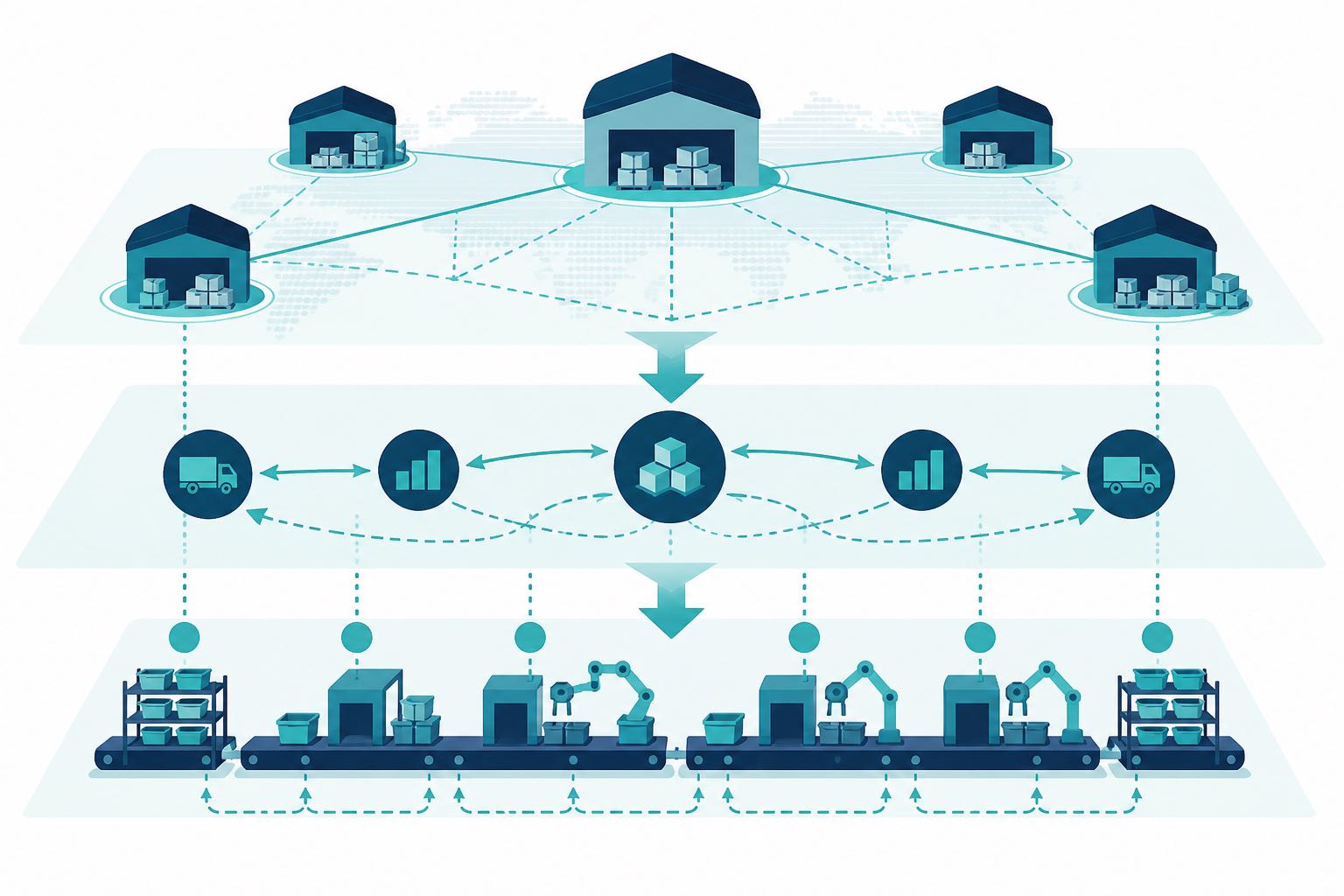
China's Action Plan for Accelerating Digital-Intelligent Supply Chains defines the model as data-driven, IT-reshaped organizational form—emphasizing decision hubs, agile response, ecosystem collaboration, and resilient security. For enterprise rollout, the easiest closed loop is often smart procurement and shortage alerts, not a one-shot grand middle platform.

Background: Morning Shout-Outs Cannot Fix Systemic Shortages
Canton Fair digital supply chain reports rank smart procurement high—seen as a lever for global capability. Meanwhile, geopolitics and overseas policy shifts are top constraints; supply chain goals move from cost-only to growth and security together. Morning shout-outs and WeChat expediting cannot produce auditable planning records.
Multi-tier inventory games, one-item-many-codes, book–physical mismatches, and invisible in-transit all leave planners firefighting. Without workbench-level alerts, more reports are only post-hoc explanations.
Core Method: Workbench-Driven Collaboration
Kitting and Shortages in One View
When planners open the workbench they should see: kitting status for orders about to start, shortage lists, purchase in-transit ETA, and substitute material suggestions. Alerts must be assignable with results written back—avoid big screens that look good but have no action items. Carton specs and load-rate optimization can hang on the same chain to cut hidden logistics cost.
Layered Multi-Warehouse Strategy
Central, forward, and line-side replenishment logic differ—hazmat cold chain and general parts cannot share rules. Transfer orders need inventory availability checks and in-transit node feedback. Reverse logistics for returns need separate locations to prevent defects entering good stock.
- Material master data governance before algorithm showmanship
- Three-way match (PO, receipt, invoice) supports finance collaboration
- Cross-border fulfillment maps customs, booking, and last mile to internal SLAs

Practice Case: Shortage Alerts Live in Four Weeks
A discrete manufacturer moved kitting checks from morning meetings to workbench tasks. In four weeks, rush meetings from shortages fell about half; procurement follow-up had one unified thread. No complex AI yet—rule engine and ETA calculation alone delivered value; demand forecasting and quantile replenishment can follow.
For global enterprises, resilience also includes dual sourcing and digital stress tests—but if internal kitting is invisible, external resilience has no foundation.
Inventory visibility and reliable delivery dates are baseline standards for SME collaboration. Reconciliation pain often starts with loose inbound/outbound discipline—cycle count variances need process fixes, not year-end one-offs. Without in-transit node feedback, planning promises become sales verbal comfort.
At the ecosystem level, industrial internet lowers cross-border information asymmetry—but internal collaboration remains the base. Get supplier delivery feedback and purchase execution visibility right first, then broader platform ecosystems succeed more often.
Cold chain, hazmat, and high-value storage need separate rule sets. Packaging standardization improving load rates often beats pure logistics price cuts for cost structure. Supply chain resilience builds on these seemingly mundane but executable rules.
Summary and Outlook
The first milestone in supply chain collaboration is letting planners complete alerts, assignment, and closure in one workbench. Smart procurement is a recognized anchor—worth making the pioneer scenario for digital-intelligent supply chains. After data is trustworthy, introduce stronger forecasting and ecosystem networks—avoid "intelligence" on dirty data.