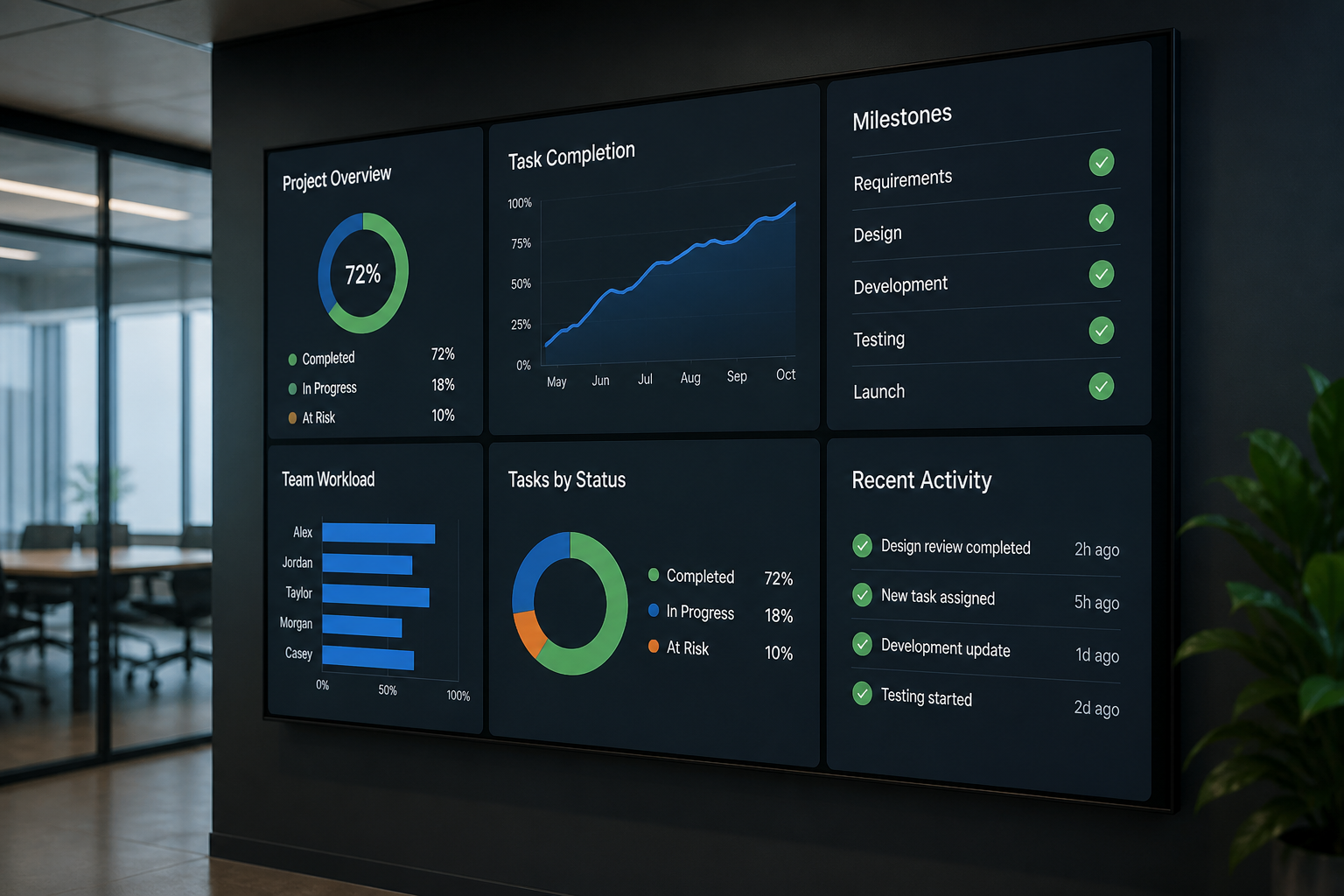
The most dangerous outcome in a digitalization project is not failure—it is the appearance of steady movement. Status meetings show launch dates, training attendance, interface lists, and dashboard screenshots; leadership feels things are advancing, while the shop floor and business teams say, "We still use the old spreadsheets." Fake progress drains budget and trust and is harder to fix than clear failure.
Spotting fake progress is not about dismissing effort—it is about asking: which business outcome changed because of this? Who must use the system every day to finish their work?
Five Common Fake Progress Patterns
- Launch equals success: accounts exist, but core work still happens in chat groups.
- Training equals mastery: attendance is high, but exceptions still go to senior staff.
- Dashboard equals intelligence: metrics look great, but drill-down does not match documents.
- Interface equals integration: files can be exchanged, but master data still lives in two systems.
- Pilot equals rollout: the model shop works while someone watches; remove support and teams revert to paper.
Three Questions That Expose Theater
First: what is the baseline and current value for this metric? Second: which manual step did frontline staff drop today? Third: when the owner is away on a weekend, can the system still run? If you cannot answer all three, do not paint the milestone green.
The XYN digital intelligence platform emphasizes owned scenarios and verifiable outcomes. Fake progress fears follow-up questions. Make those questions project discipline, and transformation will not live only in slide decks.