Foreign-trade cash flow depends on document consistency, smooth customs clearance, and timely settlement. Under the traditional model, sales, logistics, and finance manually reconcile customs declarations, bills of lading, and invoices—errors and returns can delay collection by weeks. In 2026, integrating cross-border ERP with the customs "Single Window" and banking systems is a key lever to shorten days sales outstanding (DSO).

Current State: The Hidden Cost of Document Breaks
A provincial foreign-trade association sample found 42% of SMEs still maintain customs elements in both Excel and ERP. Product names, HS codes, and unit mismatches are the top causes of returns. Each return adds 3–7 business days on average; L/C discrepancies can trigger refusal to pay. Establish cross-functional rhythms: product, R&D, and operations review data and tickets on a fixed cadence, making exception handling, permission changes, and report tuning part of steady-state ops—not post-launch firefighting.
In concrete execution (Part 1), prioritize least-privilege access, traceable processes, and explainable reports to avoid sliding back to "system live but coordination still on spreadsheets and chat." Agree delivery boundaries, knowledge transfer, and contingency plans with vendors or internal builders to reduce post-project capability gaps; keep version records and audit trails for compliance checks and iteration.
Auto-generating draft customs declarations from sales contracts, pulling live exchange rates and regulatory conditions, and writing release status back to ERP receivables cuts manual entry and status black holes. Finance can proactively follow an "released but not settled" list. During rollout, design training and runbooks so business leads can handle daily configuration, exceptions, and upgrades without vendor staff on site.
Integration Implementation Details
Build mappings for customers, suppliers, materials, HS codes, country of origin, and duty treatment; set approval flows for temporary materials. XYN Technology recommends customs and finance co-own the mapping table while IT handles versioning and change audit. Frontline feedback shows the gap is rarely a single tool—it is whether process, data, and org coordination run under one rule set; evaluate both technical feasibility and change-management cost.
In concrete execution (Part 2), again prioritize least-privilege access, traceable processes, and explainable reports to avoid reverting to spreadsheets and chat. Change management should go beyond release notes—include rollback plans, impact assessment, and key-user communication to protect business continuity.
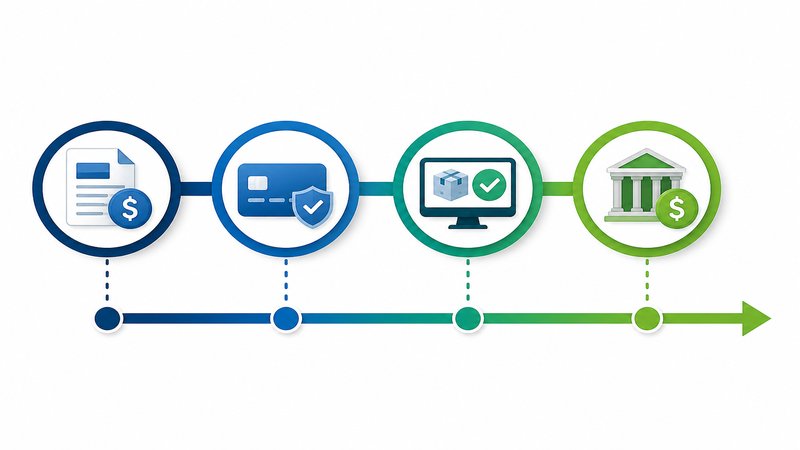
Integration must handle multiple customs receipt states: draft, filed, inspection, released, amended/deleted. ERP should log each message and receipt, support retries and manual intervention, and avoid duplicate filings. External integration APIs should keep audit logs and rate limits—balancing openness with compliance and reducing sensitive-data leakage and abuse risk.
Case: Electromechanical Export Enterprise
A client with about RMB 300M annual exports spent 60% of customs staff time on re-keying data. After cross-border ERP and Single Window integration, auto-generation of draft declarations reached 92%; average collection cycle dropped from 58 to 46 days; two customs headcount moved to customer follow-up. Data definitions and permission models must align at project kickoff and be re-checked each iteration acceptance to prevent report drift from distorting management decisions.
In concrete execution (Part 3), prioritize least-privilege access, traceable processes, and explainable reports to avoid reverting to spreadsheets and chat. During rollout, design training and runbooks so business leads can handle daily configuration, exceptions, and upgrades without vendor staff on site.
Customs automation is a hard-core foreign-trade digital scenario with direct impact on cash flow and headcount structure. Pilot on "high-frequency categories and high-return ports," using days from release to collection as the core KPI, then expand to multi-entity and multi-currency architectures. In enterprise digital transformation practice, break "cross-border ERP and Single Window: how customs automation shortens collection cycles" into measurable milestones with owners and acceptance criteria—avoiding requirements drifting in verbal updates.
Summary and Outlook
On summary and outlook, for cross-border ERP and Single Window integration, teams should clarify goal boundaries, data definitions, and coordination mechanisms first—turn abstract asks into an acceptance checklist and align progress and risk on a biweekly rhythm.
In concrete execution (Part 4), prioritize least-privilege access, traceable processes, and explainable reports to avoid reverting to spreadsheets and chat. In enterprise digital transformation practice, break the topic into measurable milestones with owners and acceptance criteria—avoiding requirements drifting in verbal updates.
XYN Technology continues to refine methodology and delivery in enterprise management informatization. Teams with cross-border ERP and customs automation needs are welcome to connect and advance verifiable, operable digital rollout together.