Discrete and process manufacturers face MES and WMS together. Both "manage materials and execution"—unclear boundaries cause: shop shortage while warehouse shows stock, delayed finished-goods receipt distorts WIP, batch trace cannot connect. This article explains how to make linkage an operational capability.

1. Functional Boundary Comparison
| Dimension | MES | WMS | Link Point |
|---|---|---|---|
| Objects | Work orders, operations, equipment, quality | Locations, inventory, waves, picking | WO material need ↔ allocation |
| Time grain | Minute/second process | Document and wave level | Real-time kitting and shortage alert |
| Quality focus | In-process, SPC, rework | Receive/ship QC, hold/release | Nonconforming isolation loop |
| Roles | Planners, line leads, QC | Warehouse, dispatch, forklift | Issue/return responsibility line |
In short: MES answers "how to make the product"; WMS answers "how materials and finished goods move and sit accurately". Overlap: line-side warehouse, shop stores, WIP staging—must be governed explicitly.
2. Typical Data-Flow Breaks
2.1 Plan to Kitting
After ERP releases production orders, MES builds operation plans and should request kitting check and reservation from WMS. Quantity-only without batch/version/substitute policy conflicts with process requirements.
2.2 Issue and Line Return
Over-issue, return, WIP moves recorded only in MES or WMS distort inventory and cost. Use work order + material + batch as key; dual ledger or integration layer for eventual consistency.
2.3 Finished-Goods Receipt
After qualified reporting, trigger inbound task and write back batch, serial, QC result. Delayed receipt lowers sellable inventory and breaks delivery promises.
3. Scenarios and Integration Patterns
- High-mix discrete: MES-led operations; WMS emphasizes WO picking and line-side replenishment.
- FMCG warehouse-heavy: WMS heavier; MES focuses line takt and quality gates.
- Multi-plant multi-warehouse: unified material master and inventory visibility or local optima conflict globally.
Integration patterns: point-to-point API, ESB/iPaaS bus, same-suite native integration. P2P for stable pair; bus for evolving landscape; native for greenfield or major replacement.
4. Landing Governance Checklist
- Define line-side warehouse ownership—shop vs warehouse, in policy.
- Minimum data contract: WO, material, batch, qty, status codes.
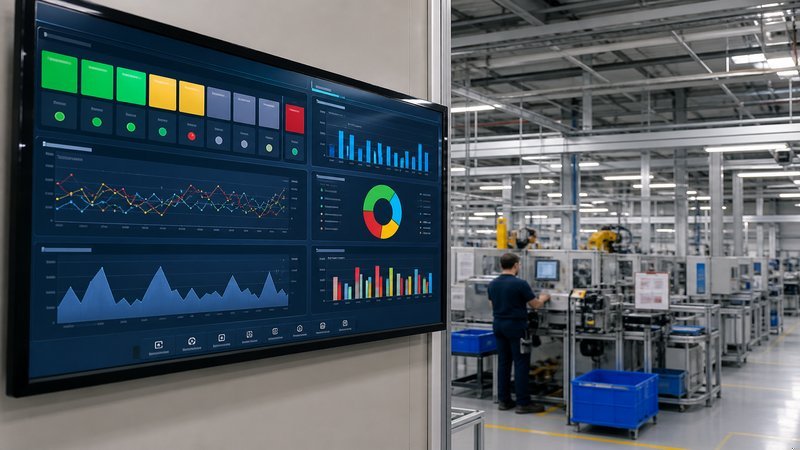
- Shortage and WIP boards with daily exception clear.
- Trace drill: finished code back to operations and raw batch—quarterly spot checks.
In manufacturing projects, XYN Technology finds: interfaces are often not the biggest barrier—unclear responsibility lines are. Clarify org and rules before APIs; rework drops sharply.
5. Outlook
As AI scheduling and visual QC spread, MES/WMS links get more real-time—but real-time needs clear master data and state machines. Smart manufacturing next step: consistent identity for every box and every operation on the execution chain.
6. Pilot Lines and Change Management
Start on high-pain lines: frequent shortage stops, trace complaints, delayed FG receipt. Pre-pilot master data cleanse: material codes, BOM version, locations, UOM conversion—or interfaces sync errors faster.
One appliance factory piloted "WO kit reservation + pick waves" on two lines—shortage downtime hours down 55%; PDA habits took three weeks. Hard cutover date; brief dual-run reconciliation—avoid paper + system double books.
6.1 Equipment Interconnect and Quality Trace
With PLC/SCADA, clarify MES collection vs monitor-only—do not put real-time control on integration middleware. Trace must link raw batch → process params → finished code for minute-level complaint lookup. ERP costing aligns on scrap, rework, outsource pricing—finance and manufacturing agree before month-end fights.
7. Quality and Equipment Extension
After MES-WMS link, extend to QMS nonconforming hold and OEE—full raw-to-finished loop. Keep single source of batch attributes.
Terminal choice: dust, drop, battery, scanner compatibility; WMS pick strategy must match shop logistics capacity.
Weekly review kit rate, shortage stop minutes, FG receipt timeliness, trace query duration—Top 3 exceptions to closed tickets.
8. Automation Equipment Boundary
AGV/robotics need task dispatch and exception return, not inventory qty sync only. Heterogeneous protocols: middleware unified state machine.
Downtime, mold change, trial production states in MES; WMS pauses/adjusts issue to reduce mispick.
Tooling-batch binding improves trace to cavity level.
Night/holiday reporting and receipt most often disconnect—shift handover checklist in MES, WMS pending inbound queue; pre-holiday kit pre-pick waves.