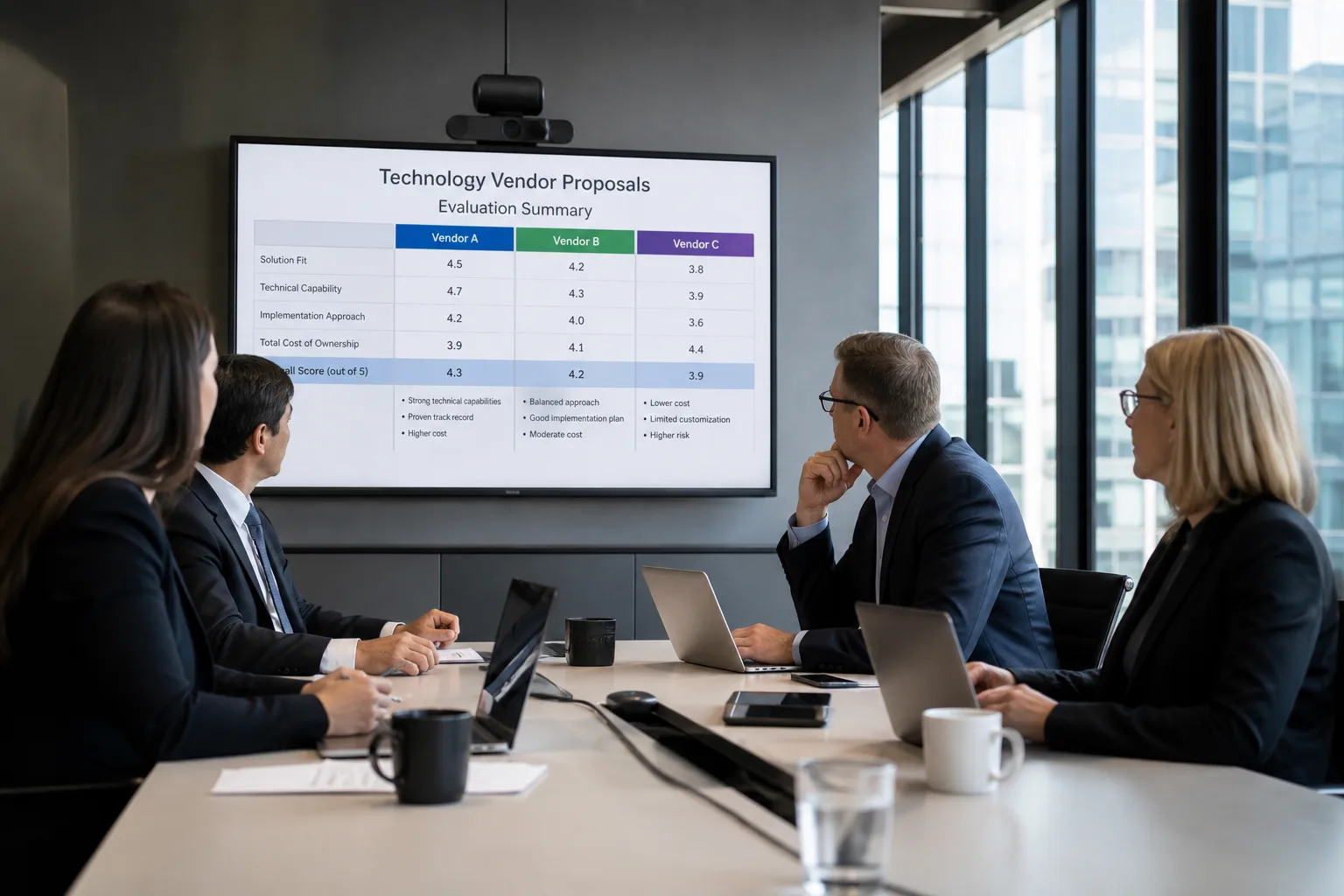
The board approved the digitalization budget, and IT and business immediately split into two camps: one advocates “adopting leading SaaS solutions—fast, with best practices”; the other insists that “since our processes are unique, we must go custom.” Both sides have valid points, but there’s a lack of a decision matrix comparing options across key dimensions, which often ends up resulting in either extensive secondary development after purchasing SaaS, or discovering halfway through customization that maintenance costs spiral out of control. Choosing the right solution isn’t a matter of faith—it’s about matching scenarios, constraints, and total cost of ownership (TCO).
First, let’s clarify: there’s no absolute superiority—only fit for purpose
The advantages of packaged SaaS are itsstandardization, rapid deployment, continuous updates, and low initial investment; whereas the strengths of customized digitalization lie in itsprocess alignment, deep integration, data sovereignty, and the ability to build differentiated capabilities over time. To decide which path to take, first ask: Is your core process industry‑wide standard, or does it serve as a competitive barrier? How complex is your existing system legacy? Are there strict regulatory requirements or data residency mandates? And can your team sustain this system in three years?
Core dimension comparison
| Dimensions | Packaged SaaS | Customized digitalization |
|---|---|---|
| Process alignment | Adapts to standard industry processes; special steps require configuration or compromises to modify workflows | Models based on actual enterprise workflows, enabling precise implementation of approval chains and accounting rules |
| Time to market | Standard modules can be piloted within 1–3 months | Clarification of requirements plus development and joint testing typically takes 3–9 months, depending on scope |
| Initial investment | Primarily subscription fees, with moderate implementation costs | Development costs are higher upfront, without rigid ongoing subscription commitments (self‑hosted options available) |
| 3–5 year TCO | Subscription accumulations plus add‑on modules and integration fees; costs rise with more users or additional modules | High initially, but maintenance and iterative updates dominate later; marginal costs decrease as scale grows |
| Integration depth | Open APIs, yet core logic remains opaque; deep integrations often hit capacity limits | Can achieve deep connectivity with ERP/MES/WMS or homegrown systems via shared databases or event buses |
| Differentiated capabilities | Homogenized offerings—competitors can also purchase the same package | Unique algorithms or industry know-how can be encapsulated into proprietary modules |
| Data sovereignty | Data resides in the vendor’s cloud, with export/migration restricted by contracts and formats | Private deployment or designated cloud options available to meet regulatory and audit requirements |
| Version upgrades | Vendors push updates, leaving enterprises to passively accept them; major releases may disrupt custom configurations | Independent scheduling possible, but requires building internal testing and regression capabilities |
| Vendor lock-in | High: processes, data, and integrations all tied to the platform | Moderate: dependent on the development team and source code delivery terms, allowing replacement of the maintenance team |
| Applicable scenarios | Mature domains like finance, HR, standard CRM, and general OA | Complex manufacturing, multi‑legal‑entity groups, stringent regulation, and deep supply chain collaboration |
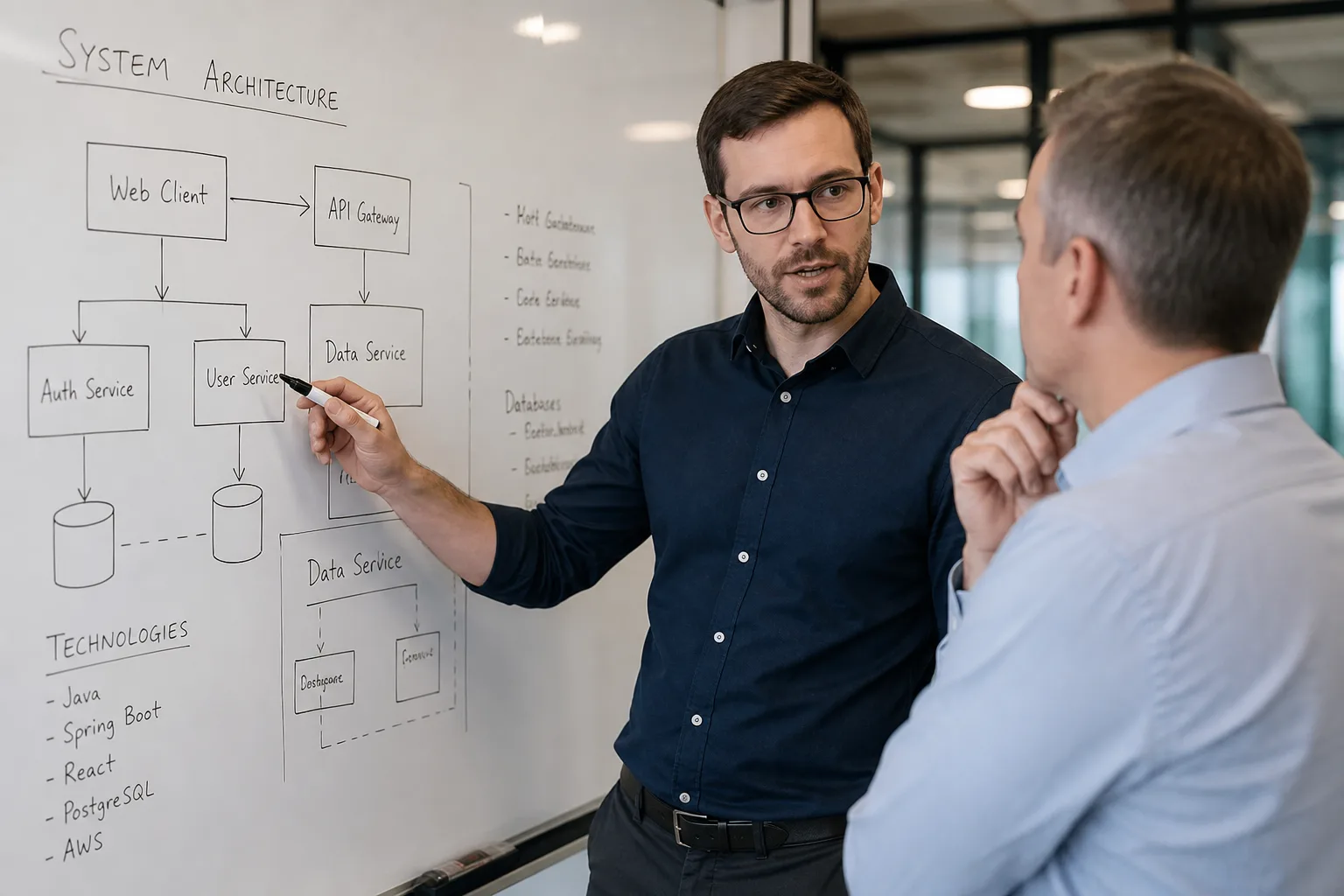
Decision framework: when to choose which approach
Signals favoring SaaS
- Processes highly aligned with industry benchmarksand differences can be accommodated within 20% configuration. Pursuing
- rapid reporting and quick deployment, where differentiation doesn’t lie in these standard modules. Internal IT focuses primarily on operations,
- with no dedicated team for ongoing secondary development.
- Acceptablelong‑term subscription payments, provided user numbers remain manageable within the vendor’s tiered pricing structure.
Signals favoring customization
- Core processes representcompetitive barriers(such as specialized assembly logic, industry‑specific regulatory messages, or proprietary pricing models).
- Requires deep integration withmultiple legacy systems, since standard SaaS APIs fall short.
- Multi‑legal‑entity, multiple ledgers, and complex internal transactions, where standard SaaS organizational models prove inadequate.
- Data cannot leave the country or must reside on a private cloud, while vendor models don’t comply.
- Already hassource code delivery and autonomous evolutionas part of a long‑term strategy (to avoid perpetually renting software).
Hybrid approach (common and pragmatic)
Standard domains use SaaS (e.g., payroll, standard financial cloud),while differentiated domains are customized(such as production execution or supplier collaboration portals), with iPaaS or event bus integration in between. This avoids both “fully custom silos” and “massive secondary development after adopting SaaS, turning it into pseudo‑customization.”
Key clauses that must be clearly stipulated in implementation and contract agreements
Regardless of the chosen path:Acceptance criteria should be quantifiable(not just “go live and use”);Data export and migration formats(mandatory for SaaS); customizations must specifysource code ownership, documentation, and knowledge transfer; integration interfacesSLA and change notification mechanisms; exit strategies (cost caps when switching vendors or development teams).
TCO estimation example (conceptual, not pricing)
Assuming a company of 200 employees, using standard ERP+CRM SaaS: first-year subscription plus implementation costs around X, with annual subscription fees increasing linearly with headcount; if, by year five, integration with a homegrown WMS and custom reports becomes necessary, integration and secondary development expenses often exceed the initial implementation costs.Customization at the same scale: Initial development and integration in the first year cost approximately 1.5–2 times the standard fee, with annual maintenance thereafter amounting to about 15%–20% of the initial development cost—by the fifth year, the cumulative total may even be lower than the “SaaS + ongoing secondary development” approach. Key variables include: the extent of process changes, the number of integrated systems, and whether source code self‑development is required . We recommend preparing a three‑scenario TCO table at project initiation (pure SaaS / pure customization / hybrid), using a five-year horizon for comparison rather than focusing solely on the first-year budget.
Involvement of organization and procurement
Selection should not be left solely to IT and finance: business leaders must confirm whether processes can operate smoothly under the chosen solution; procurement needs to assess vendor contracts and exit costs; front-line supervisors should evaluate training and change management efforts. During project review, use an RACI matrix to clearly define “who is responsible for the process outcomes”—this approach is more effective than dwelling on technical jargon in preventing post‑go-live disputes.
Common pitfalls in selection
Treat SaaS as a panacea: After going live, we found that the core scenarios required process changes, and the business team resisted.Treat customization as a work of art: Unlimited scope creep, with no acceptance after three years.Not including 5-year TCO: SaaS is inexpensive for the first two years, but by the fifth year, the subscription fee exceeds the custom maintenance costs.Ignoring integration: The software itself is inexpensive, and integration accounts for 60% of the budget before it becomes apparent.
The choice between customization and SaaS is, at its core,The trade-off between standardized benefits and differentiated control rights. Align dimensions with tables, choose paths using decision signals, and manage risks with a hybrid architecture—more important than taking sides.
Shandong XYN Information Technology Co., Ltd. (XYN Tech) both delivers customized ERP, supply chain, and production digitalization systems, and assists enterprises in assessing the boundary between SaaS and customization, as well as designing hybrid architectures and integration solutions. For more details, seexynadmin.comandAbout Us。