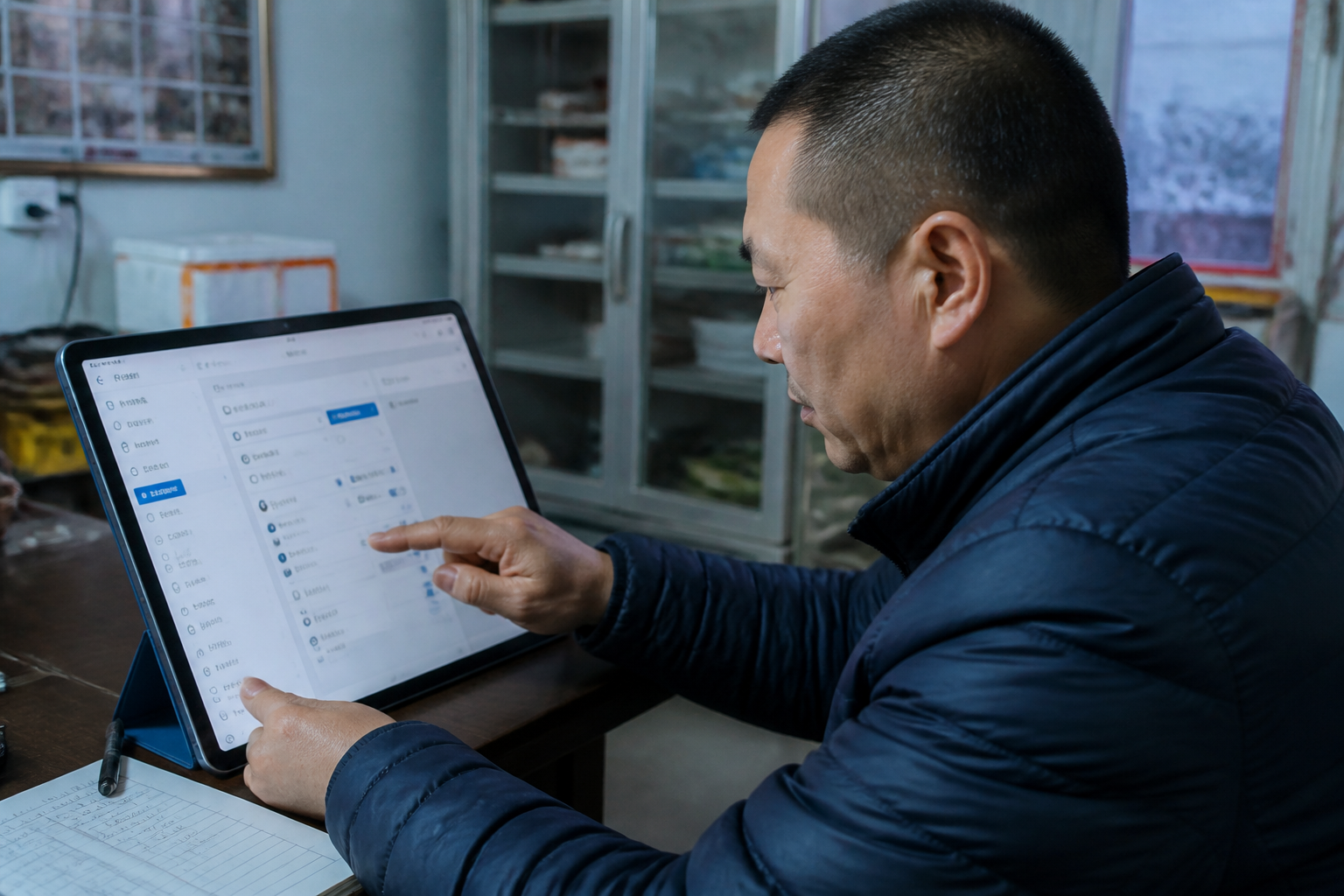
County and industrial-belt factories look "non-standard": some take orders on WeChat, some schedule by color number not material code, some invoice days after shipment. Vendors demanding headquarters templates stop projects in week one of training. Standard products survive by allowing scenario grounding while keeping one master-data and permission core—not a new system per town.
Fit local scenarios is not unlimited customization—it is local habits as configuration and non-negotiables as standard.
Recognize Scenarios, Then Absorb Habits
Common industrial-belt scenarios: high-mix low-volume, outsourced processing, color/batch management, season-end invoicing bursts. Standard products should ship scenario packs—fields and nodes adjustable, document types not invented privately. WeChat intake can remain an entry—but must land in unified orders; group chat must not become ledger two.
- Local habits into config: default warehouse, pricing unit, invoice timing.
- Master data does not open "each firm its own coding rules"—industrial-belt collaboration needs alignment.
- Implement by scenario pack—not "draw flow from zero"—to keep cycles affordable.

Standard Product Boundaries
Configurable for business; kernel-breaking requests refused: separate customer codes, ship bypassing inventory, personal spreadsheets as official ledger. Refusal enables future upgrades. The XYN digital intelligence system uses configurable apps for scenarios while master data and permissions stay standard. County firms afford and adopt through scenario packs—not onsite code rewrites.
Industrial belts need standard tools that run with peak season. Fit scenarios to scale; customize into oblivion and rebuild next year.