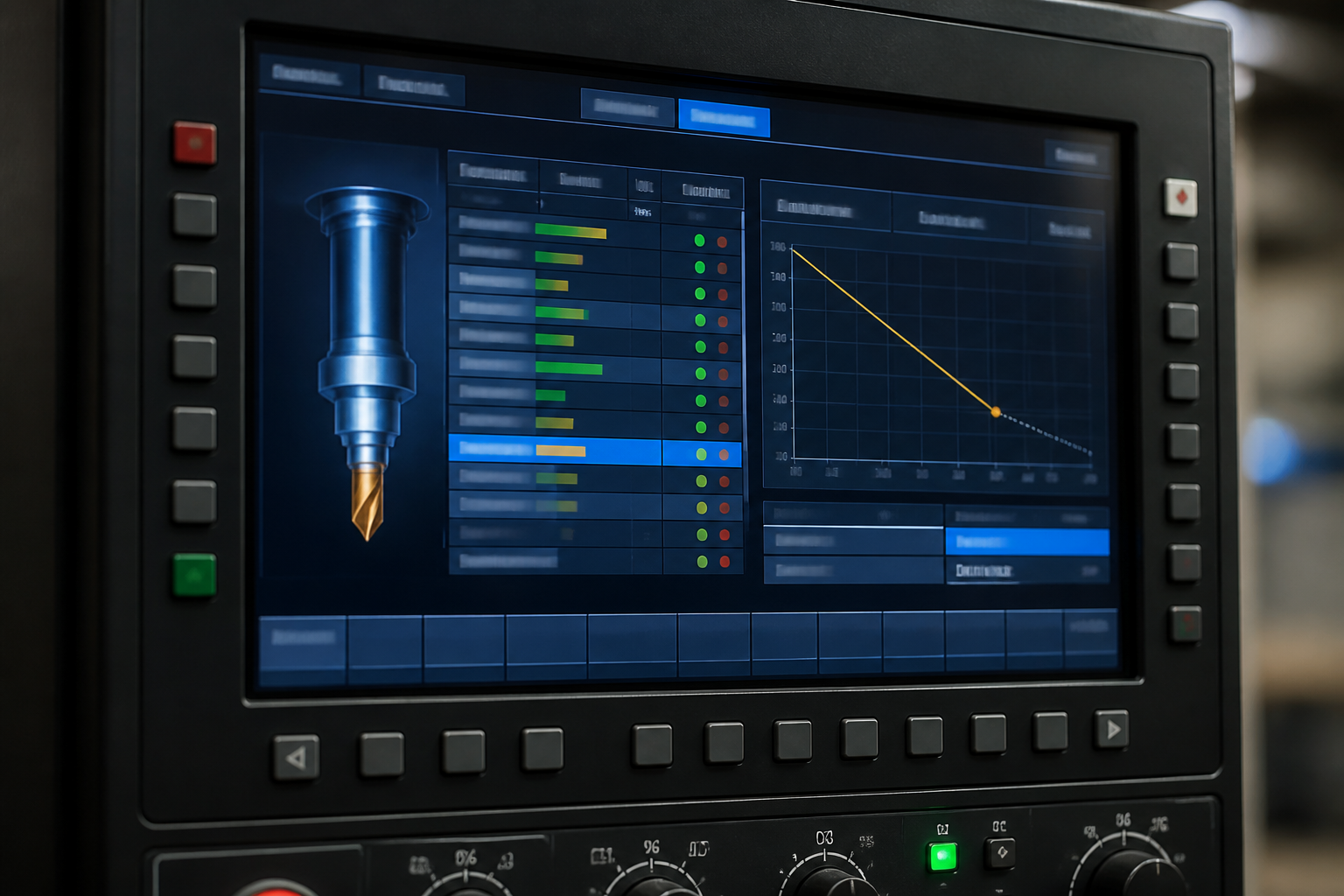
On the machining floor, tool changes follow feel—breakage gets logged after the fact. Tools are among the costliest consumables in discrete manufacturing, yet often never enter systems. Life counts, change-point warnings, and breakage tied to work orders pay back faster than digital twin first. Small scenes that reach work orders give smart manufacturing a handle.
Change points live in shop talk; scrap shows up in quality monthly reports. Clear the tool ledger first.
Count Life by Pieces or Time
Each tool has ID, material, and recommended life. Work orders carry the active tool at start and write back cut time or piece count at finish. At warning, force change or supervisor approval to continue. Breakage requires photos and stops downstream pieces.
- No unnumbered tools on machines; no one tool across machines without logging.
- Life models split by material and operation—not one number plant-wide.
- Changes link to tool inventory so shortages surface early.

Small Scene on the Work Order
The XYN digital intelligence system hangs tool life on operations—change points reach dispatch. Discrete smart manufacturing often starts with one tool, not a factory sandbox.
Check last week's breakages against work orders and tool IDs. Mismatches mean life tracking before the next five-axis machine.