Many plants deploy visual inspection and MES yet still discover quality problems after the fact. The root cause is usually that inspection results never enter work-reporting and release logic—or work reporting is distorted by incentives so data is untrustworthy. Smart manufacturing delivers quality gains only when process error-proofing, trace codes, and incentive mechanisms are designed in the same direction.
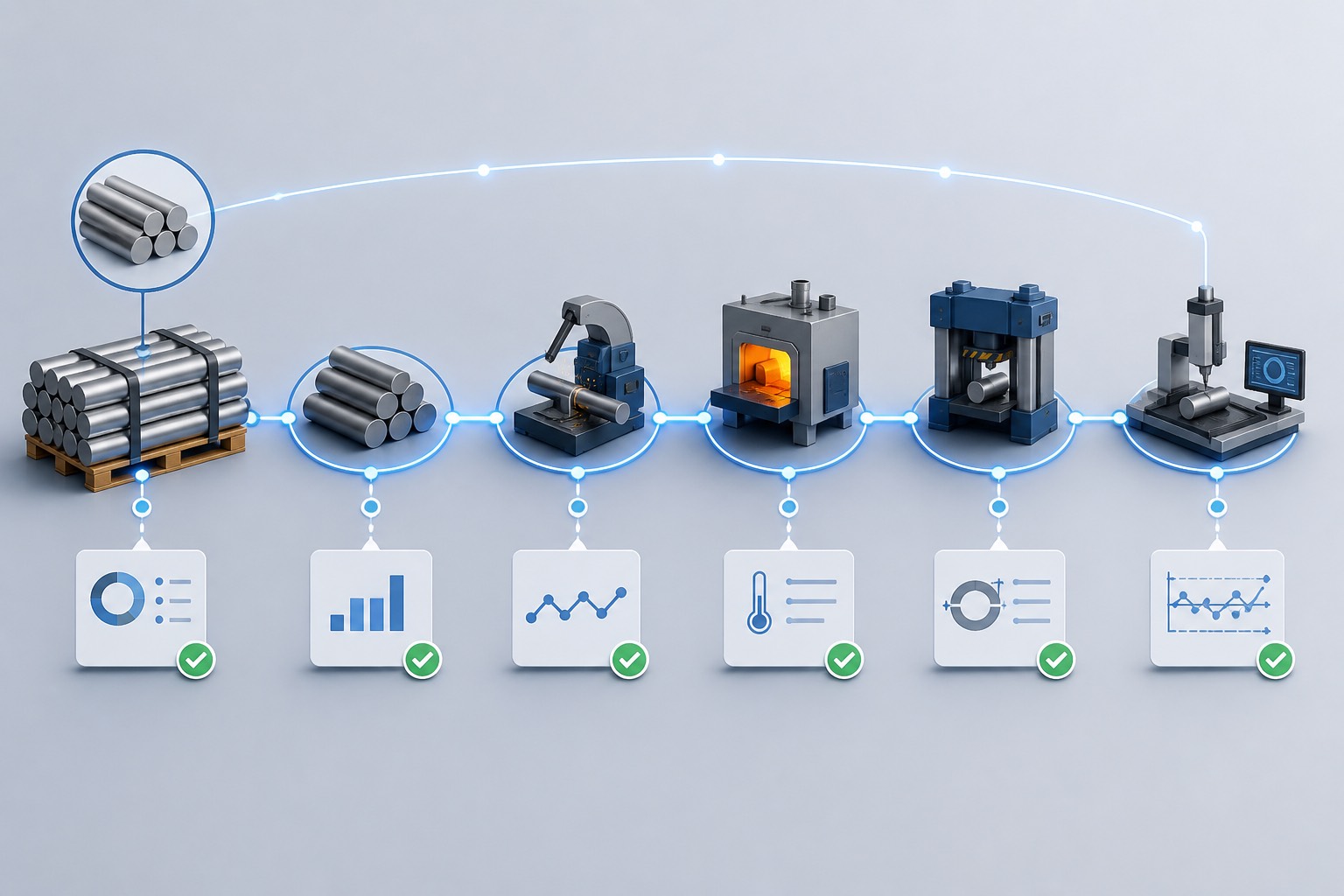
Background: Equipment Exists, Closed Loop Does Not
Discrete manufacturers often buy inspection equipment first, add MES modules later, and only then think about ERP alignment. QC photos sit on local disks; work reporting lives in another system; batch traceability relies on Excel stitching. When customers claim, there is no "one item, one code" evidence chain. MES is not bigger-is-better—the key is connecting the three to five modules that affect release first.
When work reporting is inaccurate, even advanced scheduling distorts. Many floors add collection equipment first without adjusting piece-rate and assessment—workers still have motive to over-report. Equipment cannot solve incentive problems.
Core Method: Minimum Viable Traceability Chain
Batch Management Before Full One-Item-One-Code
Small and mid plants can trace critical-part batches first, then graduate to single-piece codes. Visual inspection output should be structured: pass/fail, defect type, confidence, station, time—and forcibly linked to the current WIP batch. Nonconforming defaults block flow to the next operation; exception release requires authorization and audit trail.
Work Reporting and Quality Events on One Workbench
Team-leader dashboards should show output, first-pass yield, and open defects together. Metrics must sit beside daily work for boards to be watched. Changeover and line-side replenishment exceptions should enter the same event stream—avoid quality and planning running separate meetings.
- Fix work-reporting incentives before expanding auto-collection scope
- Include outsourced operations in batch and QC feedback
- Link predictive maintenance with quality-variation analysis to reduce firefighting

Case Study: Closed Loop on Critical Operations First
A components plant deployed visual inspection on two critical operations and reformed work reporting: no completion report without QC results. After three months customer return rate fell about 25%; trace queries dropped from hours to minutes. Investment was far less than plant-wide rip-and-replace yet formed a replicable template.
For digital twin and advanced scheduling, build on trustworthy base data first. Otherwise models are "precisely wrong."
Real resistance after equipment networking is often inconsistent networks and standards—not insufficient algorithms. Unify station clocks, barcode rules, and defect dictionaries first so vision models have stable labels. Special equipment and hazardous-material EHS ledgers must enter the system—not stay on paper inspection forms.
Once quality and planning link, rush orders and expediting face constraints—short-term floor complaints may rise, but that signals management upgrade. Use data to prove rework-cost reduction from first-pass yield gains to consolidate reform.
After line-side replenishment links with quality release, backlog and stockouts improve together because exceptions surface earlier. Resistance to higher CNC shop digitalization often lies in standard work and maintenance capability—train in sync, not sensors alone.
Summary and Outlook
Smart manufacturing quality leaps depend on traceability closed loops and floor incentives—not point equipment. Write visual inspection into release logic so MES and ERP are not two skins. Factories can move from sampling inspection to in-process error-proofing. Next, defect modes can feed knowledge bases to support steadier process optimization.