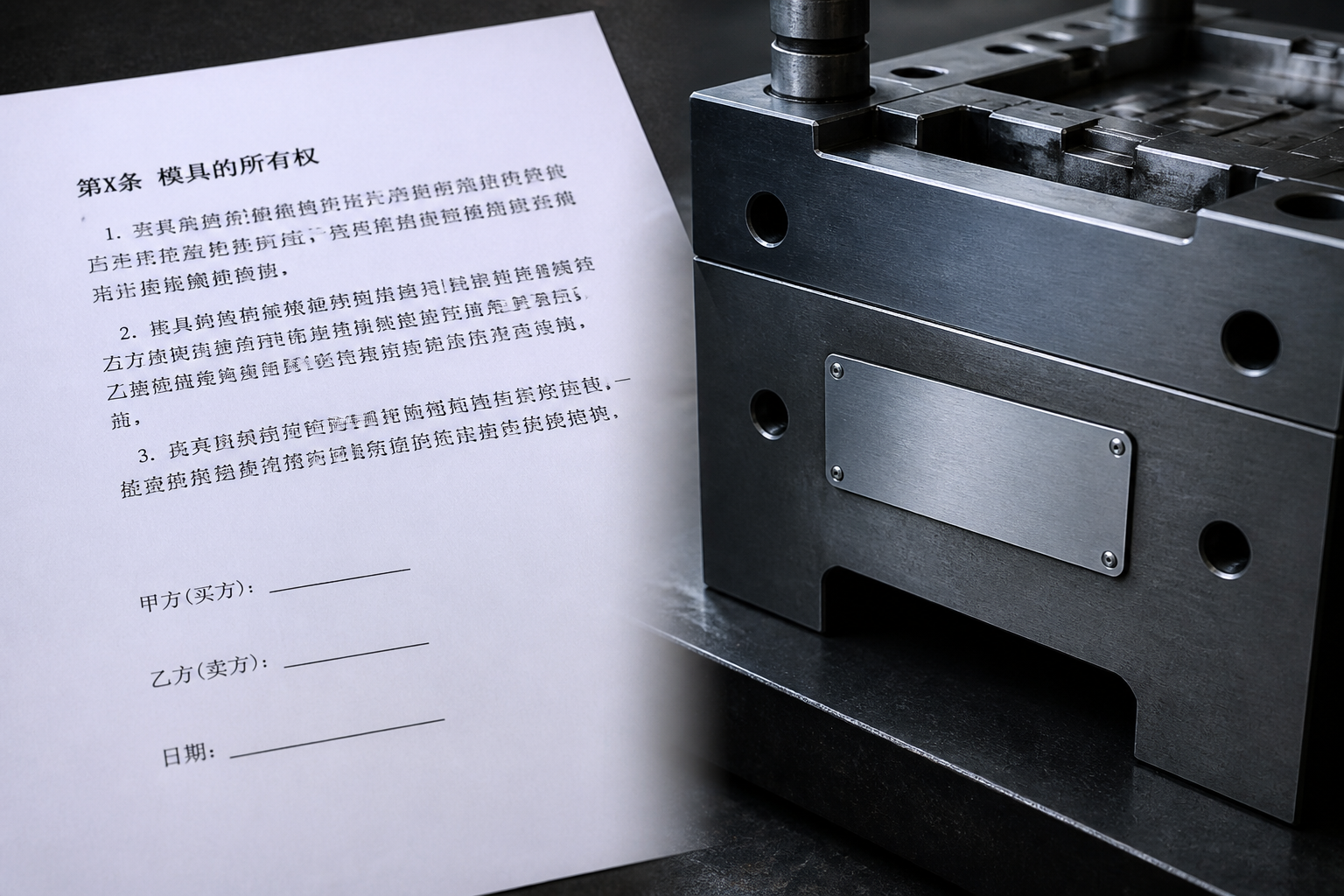
Switching suppliers reveals molds in their shop—contract only says "tooling fee paid." Ownership, custody, maintenance, IP, move-out timeline—all missing. Months of dispute while production stays with an unwilling partner. Tooling is an asset, not just an expense line. Unclear ownership means money paid buys no disposal rights.
Negotiation chips for supplier change should be written at tooling opening—not found by lawyers during the fight.
Contract Down to the Mold
Each mold: who funds, ownership, location, number, life, maintenance duty, handover days and acceptance on termination. Buyer assets get tags, records, inventory counts. Supplier-held molds are customer-supplied assets—damage compensates. Do not use "amortized in unit price" instead of ownership terms.
- Tooling acceptance ties to payment—no final pay without acceptance.
- Multi-customer mold use needs written approval—supplier cannot take other jobs on your mold.
- Supplier-change projects start mold transfer before new supplier ramp.

Ledger Matches Contract
The XYN digital intelligence system links tooling assets to supplier contracts—transfer with checklists. Clear ownership makes supplier change a supply-chain move; unclear ownership makes it a legal project. The latter costs more.
Scan all external molds against contracts. Where unclear, fix agreements now—not at the next price hike or quality incident.