Industrial quality inspection punishes both misses and false rejects: a miss can trigger batch recalls; a false reject wastes good product and slows takt. In 2026, vision large models show strength on complex defect recognition, but decision-makers need a clear cost ledger—how to balance data labeling, compute, station retrofit, and team coordination.

Background: Where Rule Vision, Deep Learning, and Large Models Diverge
Rule-based vision suits dimensional and positional defects; deep learning suits texture and fine cracks; large-model and multimodal approaches are more flexible in low-sample, high-SKU-changeover lines. Industry cases show that on lines with frequent SKU changes, large models can cut new-project tuning from 4–6 weeks to 1–2 weeks, though per-inference cost must be optimized via edge deployment. Establish cross-functional rhythms: product, R&D, and operations review data and tickets on a fixed cadence, making exception handling, permission changes, and report tuning part of steady-state ops—not post-launch firefighting.
In concrete execution (Part 1), prioritize least-privilege access, traceable processes, and explainable reports to avoid sliding back to "system live but coordination still on spreadsheets and chat." Agree delivery boundaries, knowledge transfer, and contingency plans with vendors or internal builders to reduce post-project capability gaps; keep version records and audit trails for compliance checks and iteration.
Production cares about stable false-reject rates, not lab Top-1 scores. Build confusion-matrix monitoring, drift detection, and human re-inspection loops. Regulators and customer audits increasingly require traceability: which image, which model version, who reviewed. During rollout, design training and runbooks so business leads can handle daily configuration, exceptions, and upgrades without vendor staff on site.
Implementation: From Pilot to Replication
Collect samples covering lighting variation, fixture wear, and batch differences; use active learning to cut labeling volume. Co-build a defect dictionary with process engineers so "model language" matches "line language." Frontline feedback shows the gap is rarely a single tool—it is whether process, data, and org coordination run under one rule set; evaluate both technical feasibility and change-management cost.
In concrete execution (Part 2), again prioritize least-privilege access, traceable processes, and explainable reports to avoid reverting to spreadsheets and chat after go-live. Change management should go beyond release notes—include rollback plans, impact assessment, and key-user communication to protect business continuity.
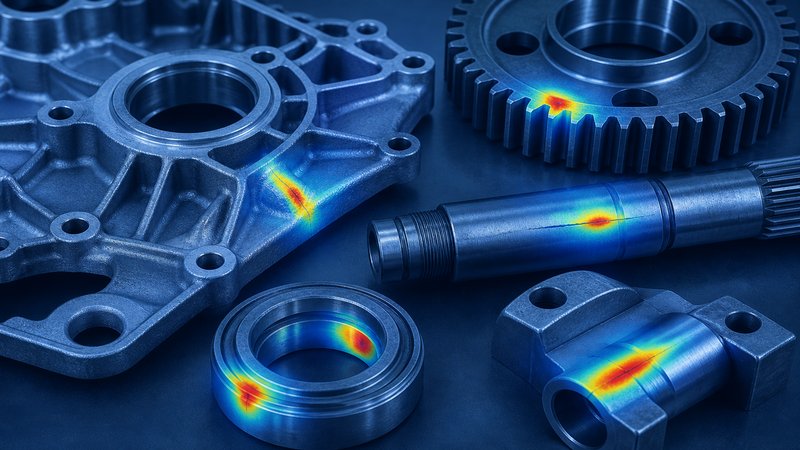
Camera selection, lighting, takt alignment, and reject mechanisms must tie to MES. Edge GPUs or dedicated inference cards cut cloud latency; when takt is below 2 seconds per piece, evaluate parallel stations rather than stacking compute at one point. External integration APIs should keep audit logs and rate limits—balancing openness with compliance and reducing sensitive-data leakage and abuse risk.
Case: Appliance Injection-Molded Part Appearance Inspection
A client relied on full manual inspection—high labor cost and poor consistency. XYN Technology deployed edge inference stations: the large model handles complex color variation and parting-line defects; rule algorithms handle dimensions. Miss rate dropped 76%; per-piece inspection time is 0.8 seconds; payback is about 14 months. Data definitions and permission models must align at project kickoff and be re-checked each iteration acceptance to prevent report drift from distorting management decisions.
In concrete execution (Part 3), prioritize least-privilege access, traceable processes, and explainable reports to avoid reverting to spreadsheets and chat. During rollout, design training and runbooks so business leads can handle daily configuration, exceptions, and upgrades without vendor staff on site.
Industrial large models do not replace every sensor—they combine with rules and physics-based models. At charter time, assess data governance, line takt, and upskilling together so smart QC becomes sustainable operations, not a demo. In enterprise digital transformation practice, teams should break "industrial large models in QC: accuracy, cost, and line retrofit economics" into measurable milestones with owners and acceptance criteria—avoiding requirements drifting in verbal updates.
Summary and Outlook
On summary and outlook, for industrial large models in QC scenarios, teams should clarify goal boundaries, data definitions, and coordination mechanisms first—turn abstract asks into an acceptance checklist and align progress and risk on a biweekly rhythm.
In concrete execution (Part 4), prioritize least-privilege access, traceable processes, and explainable reports to avoid reverting to spreadsheets and chat. In enterprise digital transformation practice, break "industrial large models in QC: accuracy, cost, and line retrofit economics" into measurable milestones with owners and acceptance criteria—avoiding requirements drifting in verbal updates.
XYN Technology continues to refine methodology and delivery in enterprise management informatization. Teams with needs around industrial large models in QC are welcome to connect and advance verifiable, operable digital rollout together.