The planner's most familiar frustration: the schedule built on Monday is unrecognizable by Wednesday after rush orders and material waits. Excel's strength is that anyone can edit it; its weakness is the same. After edits there is no version, no constraint, and no feed-back of actual labor hours. Plans forever chase change, yet change never enters the next plan.
Stepping out of spreadsheets does not mean deploying complex APS first—it means admitting capacity is finite, materials may not be complete, and rush orders must pay a price.
Three Gaps in Excel Scheduling
It does not check whether bottleneck equipment overlaps; it does not check material kitting; it does not stop sales from changing delivery dates in a group chat. Planners patch gaps from memory—when someone is on leave, the shop floor reverts to verbal dispatch.
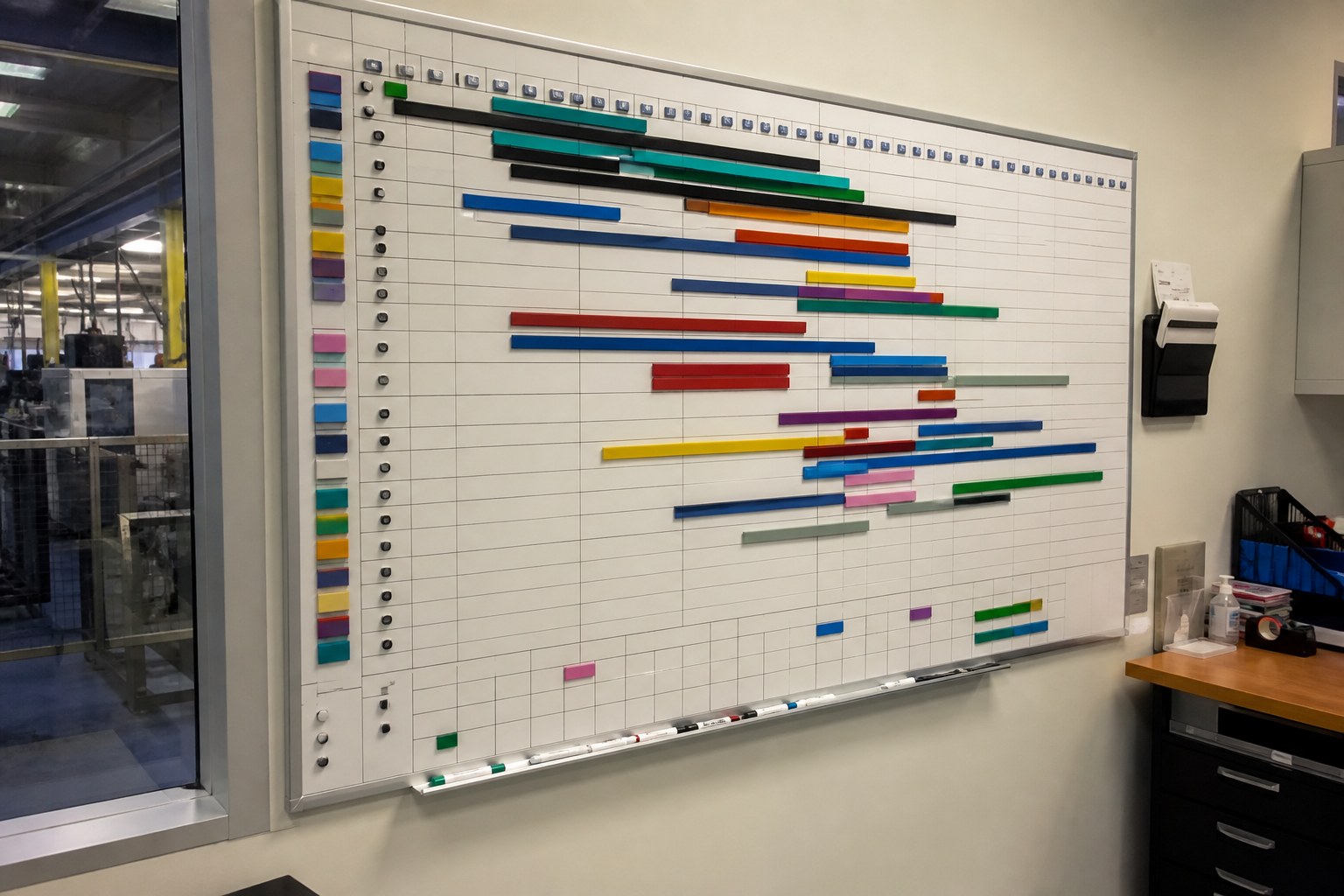
Minimum Viable Finite Capacity
- Apply finite capacity only to bottleneck operations; others can start infinite and be corrected later.
- Run kitting checks before work orders start—do not release if not complete.
- Rush orders must choose "who gets bumped"; the system records the decision maker.
- Write back actual reporting daily so tomorrow's plan uses yesterday's facts.

The XYN digital intelligence system links work orders, kitting, and shop reporting in manufacturing scenarios so plans become executable first, then optimal. Change will not disappear. A plant that turns change into the next round of constraints has truly left Excel behind.