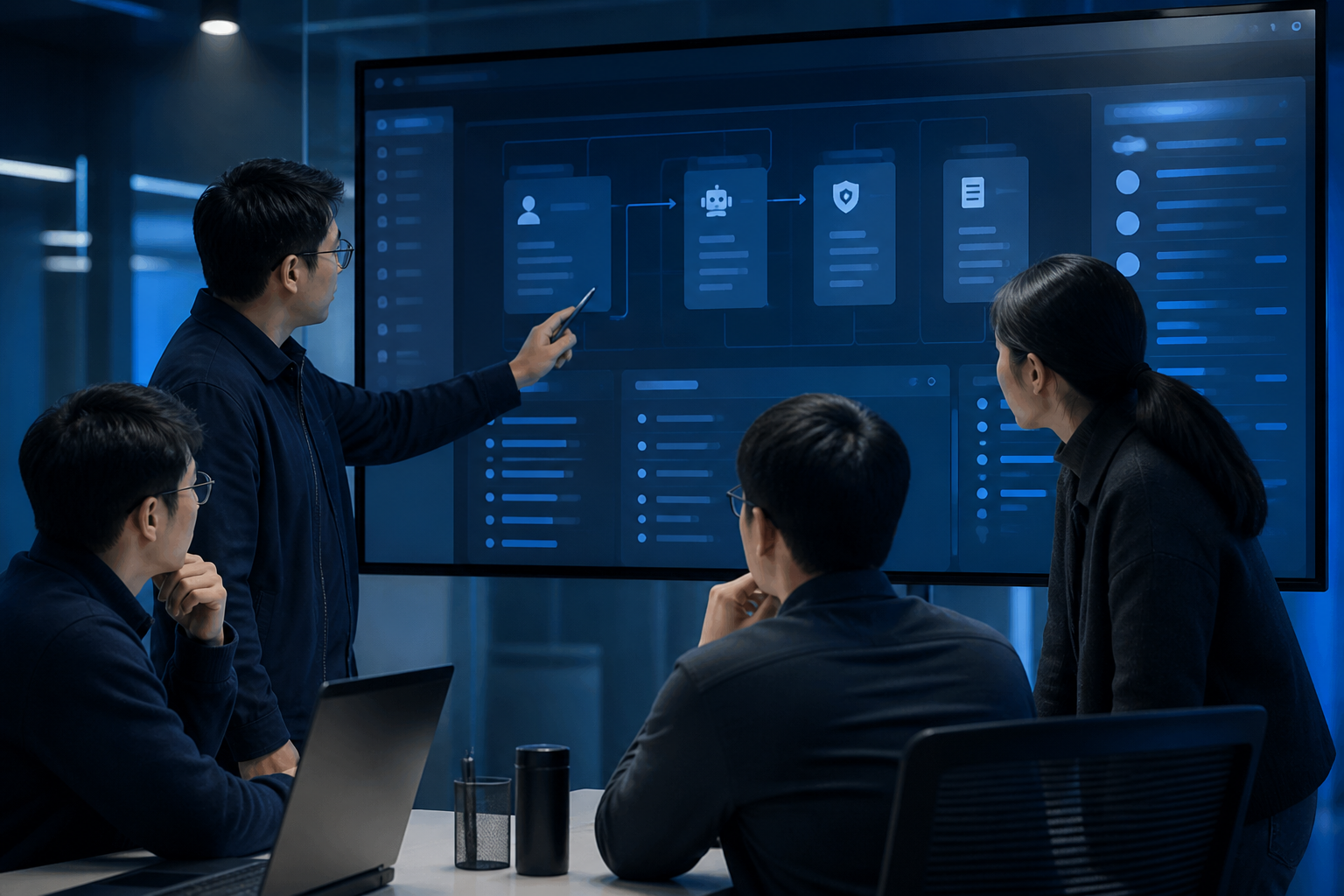
From Copilot to Workflow: AI Needs Roles, Tools, and Audit
Chat-only assistants quickly hit permission and accountability walls. To put AI in workflows, give it roles, callable tools, and replayable audit on every step—not a bigger dialog box.
Perspectivas del sector, casos de estudio y últimas novedades.
Chat-only assistants quickly hit permission and accountability walls. To put AI in workflows, give it roles, callable tools, and replayable audit on every step—not a bigger dialog box.
SMEs rarely hire a full-stack digital unicorn. Instead of an empty seat waiting for a savior, split roles: business product owner, IT for stability, external experts by scenario. Cannot hire one person—a combo can still leave capability behind.
Acceptance that only checks login and reports stops at go-live ceremony. Compare yield, on-time delivery, and inventory to baseline—or operations never accepts the investment.
A planner's day lives in group chats—shortages from warehouse, rush orders from sales, substitutes from engineering. Without one workbench, planning follows whoever shouts loudest. The workbench must compare trade-offs on one screen, not compare voices.
Rules change while models still use old thresholds—the floor gets two sets of instructions. Business rules and models must take effect the same day to avoid split brain.
Alerts nobody owns—or a hundred per day—both fail. Define anomaly thresholds and definitions first, then assign ten-minute responders. Alerts become management, not noise.
Line takt is measured in milliseconds—if QC asks the cloud every time, the conveyor stops. Latency budget decides edge or cloud, not model size.
FOB, CIF, DDP, junto con cotizaciones en múltiples monedas; los costos se generan tras la reserva de espacio y el cobro. Para que la rentabilidad bruta sea visible antes del envío, es necesario pre‑cargar los gastos de transporte, seguro, tipo de cambio y comisiones en la etapa de recepción del pedido.
La tasa de cobertura de la transformación digital de las empresas industriales ya es alta, pero la proporción de inteligencia artificial que realmente entra en la toma de decisiones sigue siendo baja. Este artículo desmonta la "creación de redes" y el "uso del cerebro", dando una ruta de inicio digital que las pequeñas y medianas empresas pueden aceptar.