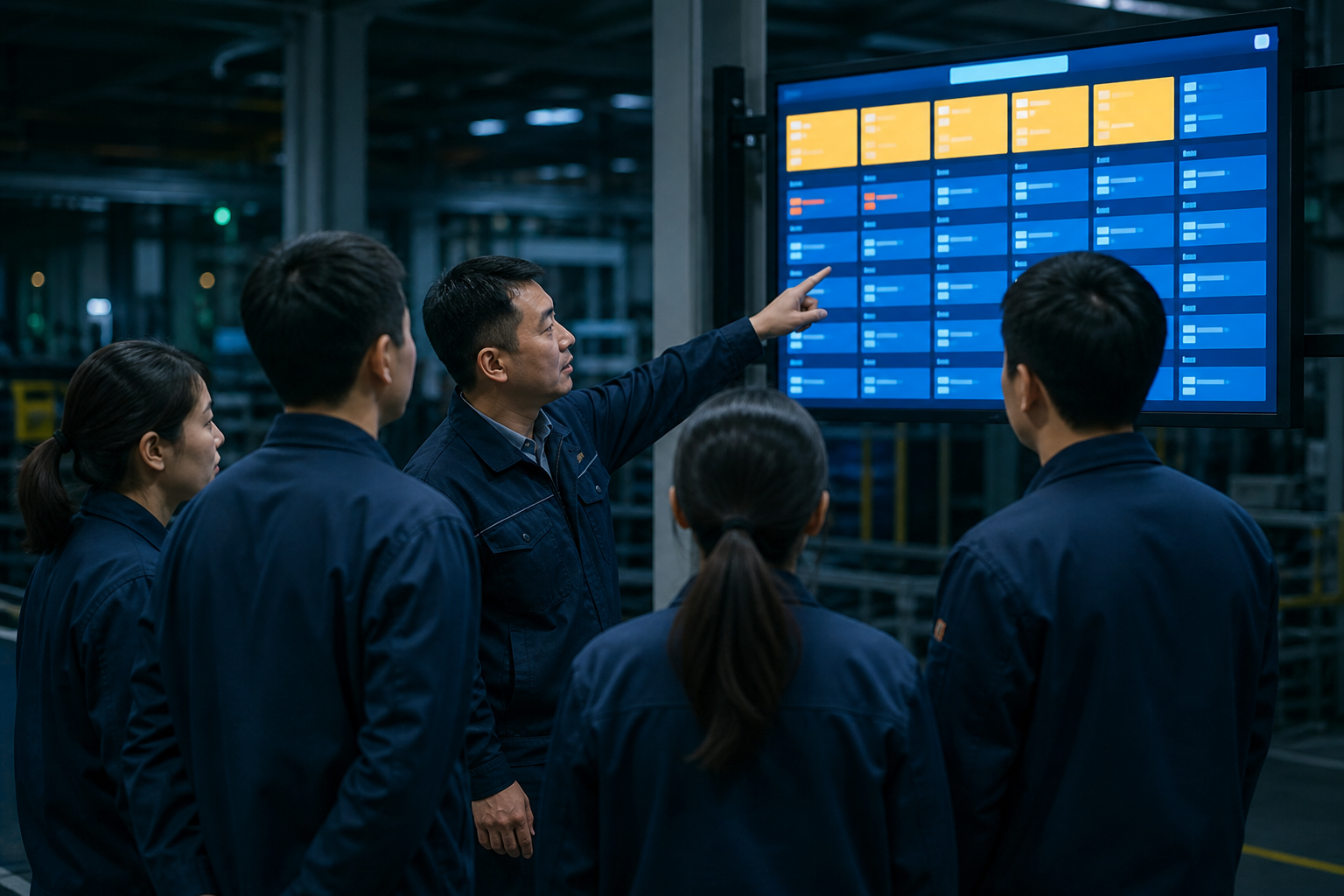
Night-shift scrap, missed inspection, unescalated downtime—daytime's first reaction is often more monitoring. People get watched tighter; information still breaks on the handoff page. What night shift really lacks: which process version this work order locks, what open exceptions day shift left, who may change parameters. Systems should solve information transfer—not turn night shift into a watched shift.
Monitoring can supplement discipline—it cannot supply context. Without context, diligent night shift still executes the wrong version correctly.
Hand Off to Systems, Not Memory
Before day shift clocks out, open andon items, deviation tickets, material waits, and equipment alerts must enter the next shift's visible queue—not only a notebook. Night shift confirms three things before line start: work order version, safety points, open exceptions. Confirmation records name and time—that is management, not attendance shaming.
- Escalation rules by downtime duration and safety level find the right person automatically—not the night lead's personal contacts.
- Parameter changes require authorization; night temporary changes need deviation tickets reviewed by day shift.
- Cameras for process and safety evidence—not as primary performance data.

Night Dashboards Show Only What Needs Action
Making "who is at the station" the main screen is lazy management. Main screen should be open exceptions, material waits, quality checkpoints, and equipment status. The XYN digital intelligence system keeps work orders, deviations, and andon continuous across shifts—night shift sees the same facts, not a retold story. Continuous information makes night quality approach day shift; monitoring alone makes night shift afraid to report.
Digitize handoff first. If monitoring is still needed, discuss whether cameras face process or people.