Electricity already occupies a visible share of manufacturing cost at many plants, yet scheduling still looks only at due dates and changeovers. Energy data stops in logistics bills; planners cannot see which capacity segments are most expensive. Under time-of-use rates, day shifts may rush work straight into peak hours while night shifts sit idle in valleys. Saving power becomes a poster; line rhythm ignores it entirely.
Energy must enter scheduling—not through an energy retrofit first, but by letting planners see: if this order moves two hours, what happens to power cost and due date?
Why Bills Never Reach Planning
Meters aggregate by plant; lines have no sub-metering. Planners do not know which machines draw power in peak hours—they can only "try to run at night" by habit. Habit fails the moment a rush order arrives. Without sub-metered load, energy stays a post-mortem line item.
Another barrier is incentives. Planners answer for due dates, not cost per kilowatt-hour. Moving a shift takes coordination; not moving draws no blame. If metrics never enter scheduling meetings, energy data is only good for annual reports.
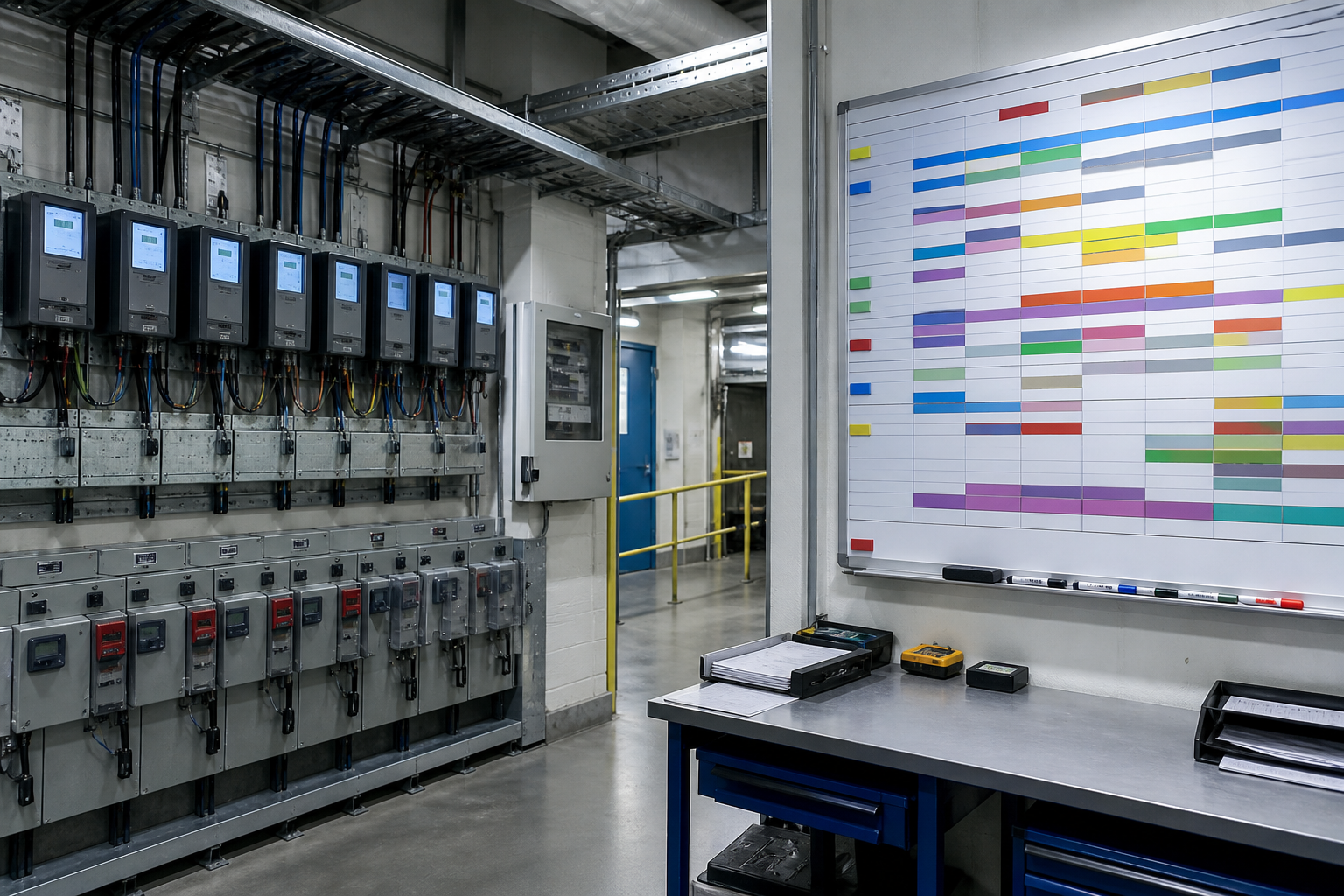
Make Energy a Scheduling Constraint
- Sub-meter key lines first; show peak, shoulder, and valley load in the planning view.
- Move deferrable heat treatment, compressed air, and centralized charging to valleys; reserve peaks for due-date-critical machining.
- Rush orders must show extra power cost and require sales or management sign-off—not silent absorption by planning.
- Track "peak-hour output share" weekly; savings count only when that share falls—absolute bills are distorted by volume.
The XYN digital intelligence system can make scheduling, work orders, and load windows a configurable plan. When energy enters scheduling, time-of-use pricing becomes a management tool—not finance's month-end surprise.