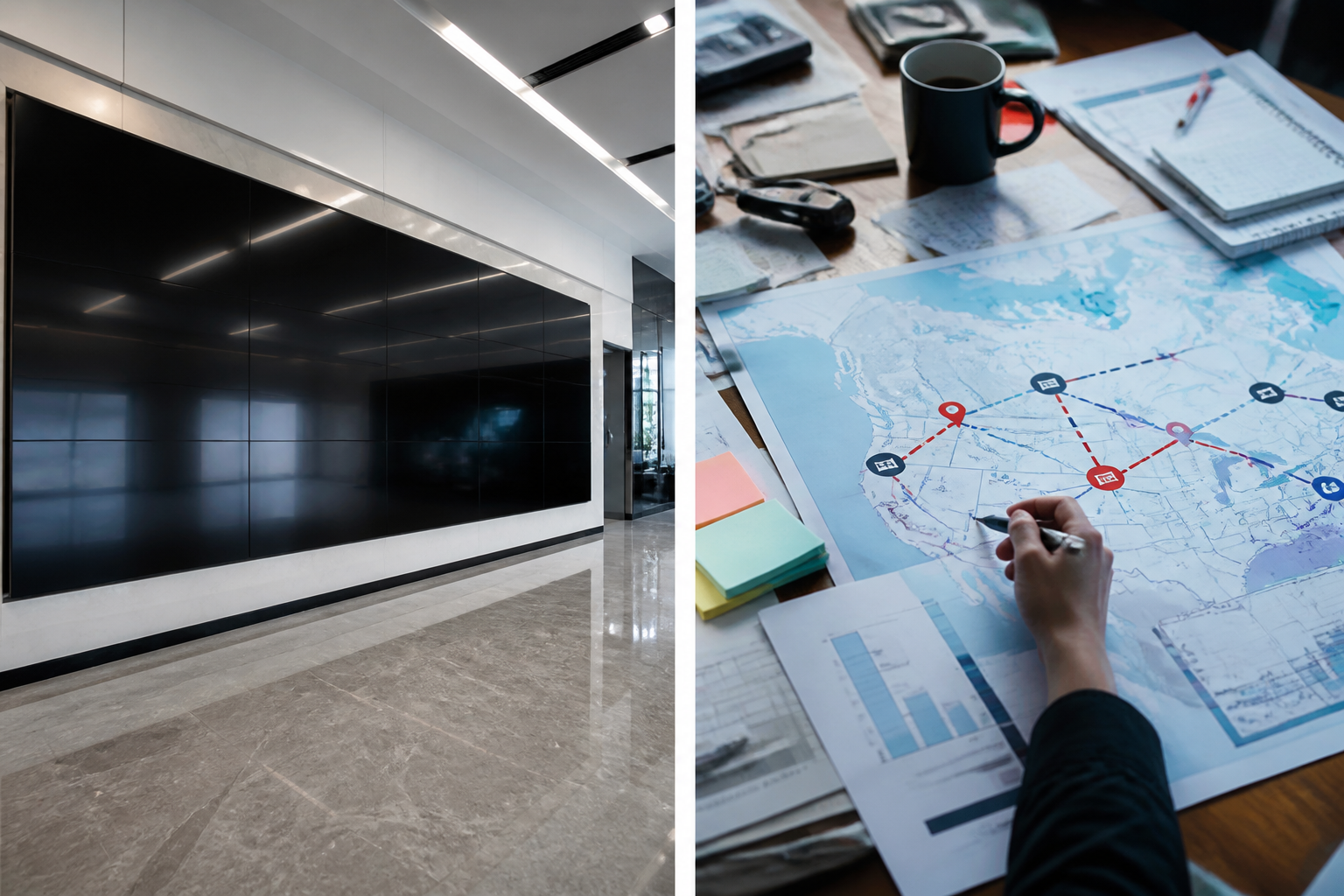
Visibility budgets often buy a wall first. Maps light up; planners still open spreadsheets: when does this lot arrive? is this bin stocked? First users of supply chain visibility are planners and warehouse staff—not the tour route. Build shortage, in-transit, bin, and pending-ship tools for those roles—accurate enough to act; the wall is projection of the same data. Projection optional; tools mandatory.
Shows can see logistics; decisions need material. That is visibility.
Role Screens Beat Walls
Planner: shortage list, supplier promise, ATP. Warehouse: receive, ship, bin, expiry. Carrier/driver: window and POD. When those three screens agree, the wall can be trusted at a glance. When they disagree, the wall is animation.
- Source data from documents—no manual lighting for the wall.
- Refresh rate by decision need—inventory on scan, not hourly art refresh.
- Alerts push to owners—not only flash on the wall.

Big Screen Is Optional Projection
Project when hosting needs it. The XYN digital intelligence system puts planning and warehouse actions on one fact layer—visibility is a byproduct. Serve two roles first—complaints drop. Serve the lobby first—in three months the wall dims and spreadsheets remain.
Put planner and warehouse screens in acceptance. Written in, visibility is not a show project.