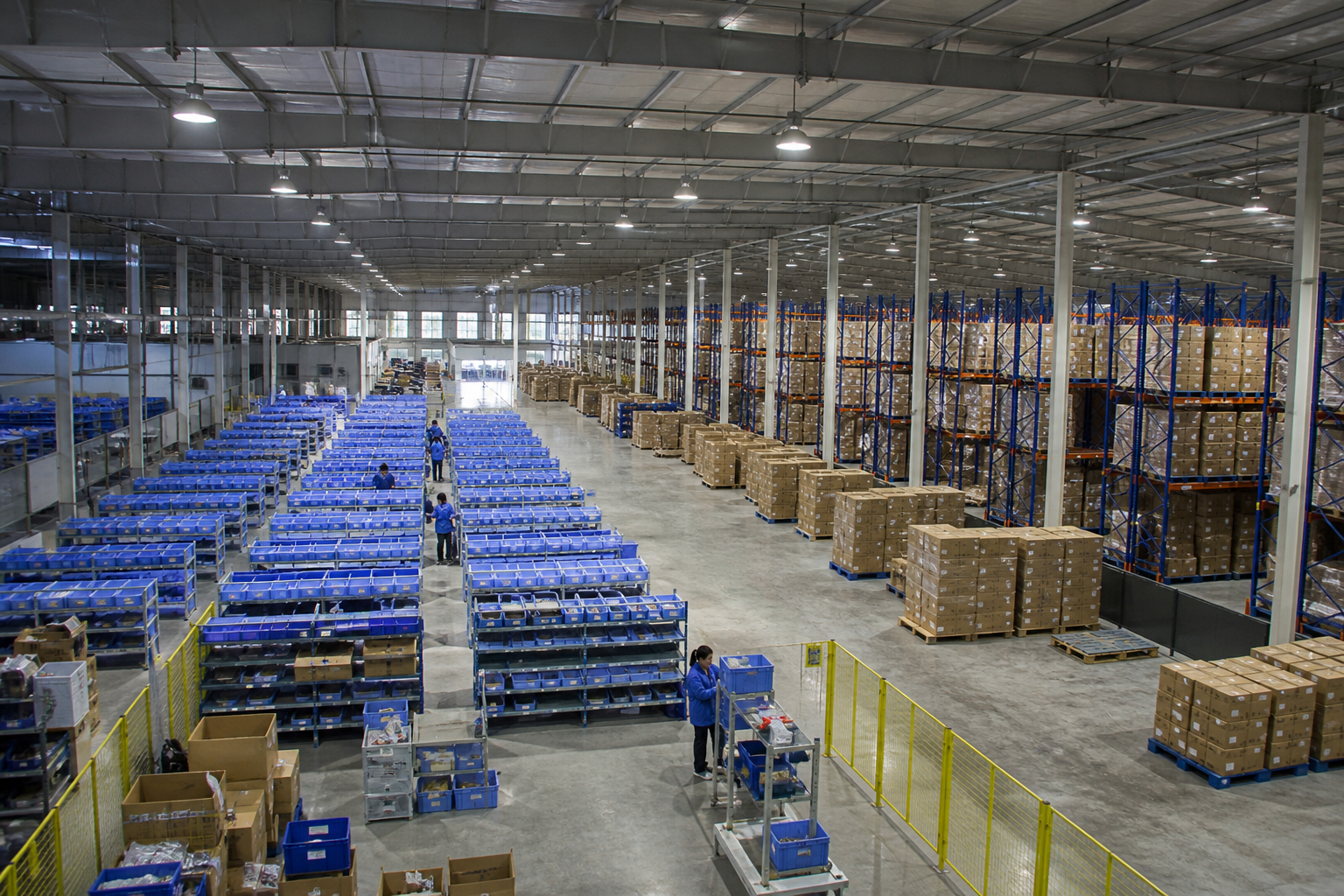
One warehouse ships retail full pallets and e-commerce three-piece kits. Pickers break cases for e-commerce; key account pickup finds cases already broken. Without channel-specific minimum pack and slot strategy, advanced WMS fights itself. E-commerce needs break-bulk zones, piece pick, check stations; key accounts need full case/pallet, wave by route. Same aisle—accuracy and productivity drop together.
Not every SKU needs dual inventory—fast movers and high break-bulk SKUs deserve separate slot rules.
Pack Levels Match Channels
Define each, inner case, case, pallet. E-commerce defaults to each—no opening full cases unless replenishment rules trigger. Key accounts default to case or pallet—break-bulk surcharged or refused. Replenish from full-case zone to break-bulk by min stock—not break at pick face.
- Break-bulk zone capacity limited—control SKU count; long tail can virtual bundle from case zone.
- Cycle count by pack level—break-bulk and full-case variances counted separately.
- Returns: full-case and break-bulk separate backflow—avoid mixing damaged into sellable each.

Slots Are Strategy, Not Labels
The XYN digital intelligence system binds sales unit, channel, and slot type to outbound rules—pick tasks do not break a pallet for a three-piece order. Right strategy makes automation meaningful; wrong strategy sends errors faster on conveyors.
Split top SKUs by channel first. After split, count case-break events—drops mean strategy landed.